
By Ashley Doody, Chief Product & Technology Officer, Matrix
Recruitment isn’t drifting towards change; it’s accelerating into it. Over the past year, workforce technology trends have shown AI move from novelty to necessity, reshaping how people search for roles and how organisations attract them. Tools that felt advanced in early 2025 already look basic. Some job titles created to help companies adopt AI have been overtaken by the technology itself.
This isn’t gradual evolution. It’s a fundamental reset. And it’s forcing employers, recruiters and technology providers to rethink what effective hiring looks like in a world shaped by automation, personal agents and real-time intelligence.
Here are the forces that I believe will redefine recruitment technology and workforce platforms in 2026.
AI Agents Will Become the Candidate’s First Gatekeeper
AI-driven personal job agents are reshaping candidate behaviour at speed. Individuals can now deploy tools that work continuously on their behalf, scanning listings, interpreting skill requirements, matching experience and surfacing opportunities instantly.
The traditional search-and-apply model is giving way to a more automated, curated experience. More and more, candidates expect relevant roles to come to them, not the other way around.
This shift means employer visibility increasingly depends on how understandable an organisation is to AI systems. Structured, up-to-date and transparent information becomes essential. Employer brand content now needs to exist both for human audiences and for the algorithms that mediate their first interactions with work.
AI Platforms Are Becoming Recruitment’s New Digital Front Door
With the ability for organisations to build apps within ChatGPT and similar ecosystems, a new channel for employer discoverability is emerging. When candidates ask AI assistants about leading workplaces or career opportunities, responses are shaped by the data organisations make available. This requires disciplined stewardship of digital credibility. Employers need consistent, detailed and honest descriptions of their roles, culture and expectations, written in ways machines can parse accurately.
For workforce technology platforms, like our very own Matrix Prism, this further elevates the importance of clean, contextual workforce data. Visibility, structure and accuracy are no longer ‘nice to have’ features; they are integral to being found.
In-House Teams Now Have Tools That Rival Traditional Agencies
AI sourcing engines such as PeopleGPT have democratised access to capability once reserved for third-party recruitment firms. A single internal recruiter can now reach hundreds of millions of profiles across multiple datasets, with AI filtering and ranking talent within seconds.
The scalability is extraordinary. But with scale comes complexity. More data means more noise, and the risk of inaccurate or misinterpreted candidate information increases.
This places new expectations on workforce platforms, including:
- maintaining clean datasets
- providing transparent audit trails
- offering a single source of truth for candidate journeys
- surfacing reporting that explains why recommendations or shortlists were generated
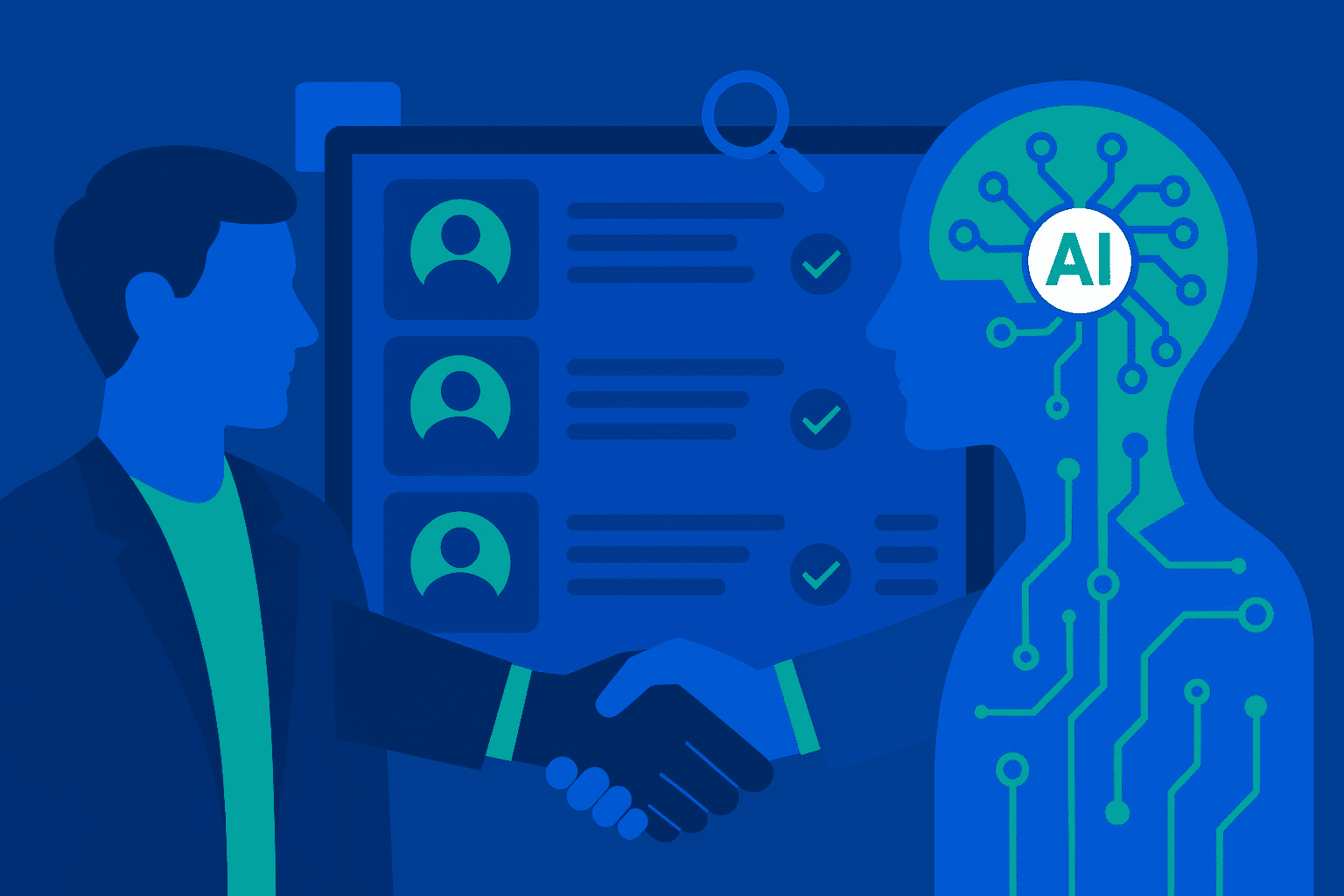
Technology isn’t replacing recruiters; it’s extending what one recruiter can achieve – The all-importance of humans and automation in harmony.
AI-Generated Profiles Will Push Screening Further Upstream
Generative tools now make it easy for candidates to produce highly convincing CVs, fabricate experience or even generate synthetic video content. It’s increasingly common to see applications referencing specialist or proprietary systems that are not publicly accessible, raising clear questions about authenticity.
This is precisely why AI-generated profiles are pushing screening much further upstream. Traditional referencing is becoming less reliable, and employers can no longer afford to wait until after an offer is made to validate identity, experience or capability. Earlier, data-led verification – from employment and financial information to digital identity, social presence and skills testing – is becoming essential to reduce risk and maintain confidence throughout the hiring process.
Screening technology therefore needs to sit far more closely or even within an organisation’s workforce technology stack, integrated directly into sourcing, assessment and decision-making workflows. Solutions such as Matrix Security Watchdog are already delivering deeper, faster and more robust checks that support early-stage validation without disrupting the candidate experience, but in fact enhancing it.
Modern verification APIs – including those used by providers such as Konfir – also play an important role by enabling real-time, validated employment data to replace outdated references. This supports a screening process that is more secure, efficient and transparent, from the very beginning of the hiring journey. Integrations like these reflect an important shift: screening is no longer a final step, but a foundational part of hiring decisions, strengthening trust and accuracy at the moment they matter most.
Human Judgement Will Anchor an AI-Driven Hiring Process
For all its power, AI cannot replicate human nuance. Algorithms detect skills and patterns, but they cannot fully interpret potential, motivation or cultural fit. Recruiters remain central to the process. CVs are now starting points for deeper discussion rather than the basis of a decision. People provide the contextual understanding, integrity assessment and relationship-building that underpin effective hiring.
At Matrix, our guiding principle reflects this balance: let technology handle scale, speed and signal detection, but keep people in the loop for meaningful interpretation. Trust remains the most important metric in hiring, and trust is fundamentally human.
Looking Ahead: The Workforce Platforms That Will Define 2026
The next generation of workforce technology will be shaped by three priorities:
1. Adaptive Automation
AI that enhances hiring workflows, improves sourcing speed and gives recruiters intelligent, real-time support.
2. The Rise of Real-Time, Evidence-Based Verification
Earlier, objective validation that replaces unreliable traditional referencing and strengthens trust through verified data and automated checks.
3. Exceptional User Experience
Intuitive, transparent platforms that provide clarity, simplicity and seamless interaction for candidates, recruiters, hiring managers and suppliers.
Recruitment in 2026 will not simply be faster. It will be more intelligent, more transparent and far more aligned to the skills organisations genuinely need. Those who embrace AI with clarity – and combine it with strong human judgement – will set the standard for a more connected and trustworthy future of work.